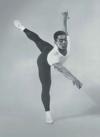
I was born in New York City. My mother and father came from South Carolina, but they had lived in the north for years. My mother went to school in Chicago and my father, who was a dentist, went to school in New England.
Both my father and his brother went to Dartmouth and then Harvard Medical School. My uncle was a doctor and they opened a practice in Harlem on “Striver’s Row,” a beautiful block of brownstones. Eventually my father moved his office to 152nd Street and Amsterdam Avenue, across the street from the Dance Theatre of Harlem. He could look out his window and see Tanaquil Le Clercq arriving in her wheelchair to teach class. More…
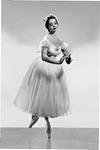
I started at the School of American Ballet, probably in 1943. I was the first black in the school. I knocked on the door and presented myself. I thought there was considerable surprise, but the door was opened and that was it. After a while I was offered a scholarship, and so I had to stop doing Broadway shows. You had to have all your energy. More…
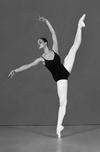
I am interested in black and mixed-race dancers, ballerinas in particular, because I see almost none in the major classical companies. Like me, the gay boy who didn’t want to be Prince Siegfied but Odette, they too are “other.” Now, when I am teaching “swan arms” to my students I think of Darci Kistler and Julie Kent. I wish an image of a black ballerina doing swan arms came to mind. More…
Originally I was interested in puppets and made them out of papiermâché. I was also interested in staging things. I had a little theater in my backyard that I built in a woodshed. My twos were spent studying at the Jones-Haywood School of Ballet and that’s how I got into dance training, because they took me up there to see them rehearse one day. I wanted to show the teachers my tap dancing, but they were only interested in my legs and things for ballet. More…
Whatever else we may take away from 2015…ballet lovers will recall it as the season dancer Misty Copeland saw her dreams come true... When Copeland appeared in starring roles this season…black spectators appeared in large numbers packing the Metropolitan Opera House stalls… This expansion of the audience likely will be the crowning achievement of [American Ballet Theatre’s] 75th-anniversary season…
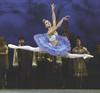
While Kitri in Don Quixote has been suggested as an ideal vehicle for her, I don’t agree. Kitri is a jumping role, and while a ballerina’s extension can distract from the height of her jumps in the opening scene, in the jumps of the so-called Vision scene she has nowhere to hide… She will be more at home in the English repertoire, in gentle pieces like Ashton’s Cinderella andA Month in the Country. MacMillan’s Manon would be her apotheosis… In the meantime, we already have the example of what she can do, in Romeo and Juliet…
Her entrance at the Capulet ball is sensational, and not only for the innocent wonder of Juliet’s expression as she looks around to assess the glittering assembly – an emotion this dancer, as a child of poverty, may understand particularly well. No, Copeland’s entrance is also remarkable for the way her upturned face catches the light, for the quickening of energy that denotes her character’s excitement and the artist’s eagerness to perform… After [her] private tryst with Romeo, [and] the Nurse whispers Romeo’s identity in her ear, this Juliet’s face registers a depth of sorrowful understanding… Experiencing the first tingle of romantic attraction is not what makes her a woman, as much as coming to recognize the world’s cruelty and stupidity… More…
Louis Johnson: I was born in North Carolina. My family moved when I was around six and I was raised and studied in Washington, D.C. In the ’40s, when I was in high school, I studied ballet with Doris Jones and Claire Haywood, two incredible ladies who started me in dance. BR: Was there any background of dance, theater, or music in your family? Johnson: None at all. My mother and grandmother raised me and then I sort of raised myself. I don’t have any family now because they are both gone. BR: Did you ever think when you started that it was odd for a boy or a black boy to be in ballet? Johnson: I never had that kind of thought. I was always artistic. I grew up around a YMCA and I was an acrobat, I swam, and played a little ball. They had crafts there, like carpentry; they had art and they had groups come in and do tap dance and what you would call interpretive dance. I tapped with a young man named Miles Conti. We made up routines and tapped around the city. More…